
Back to News
Mitigating the Environmental Exposures of The Cannabis Industry
The rapid expansion of the legal cannabis industry carries a complex and often overlooked environmental footprint that, without risk management protocols, can damage local ecosystems and expose contractors, operators, and owners to environmental liability and regulatory fines. As the cannabis industry continues to expand, recognizing and mitigating the environmental and human health exposures of the cannabis supply chain, from cultivation to manufacturing to distribution, is key to limiting its environmental impact. Risk management strategies, including best practices and pollution liability insurance, are critical to the well-being of our environment and to the longevity, reputation, and financial security of those operating within the industry.
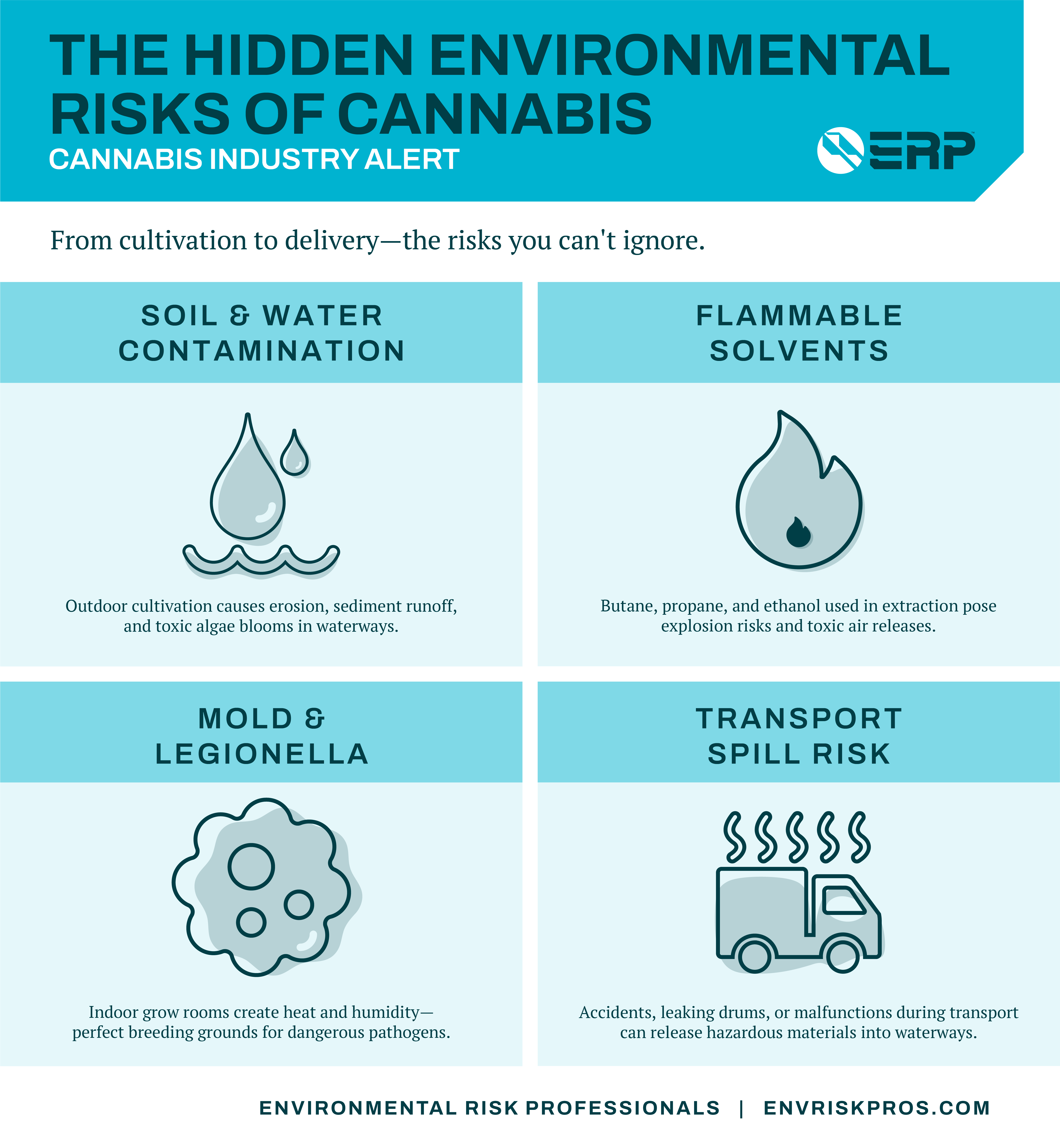
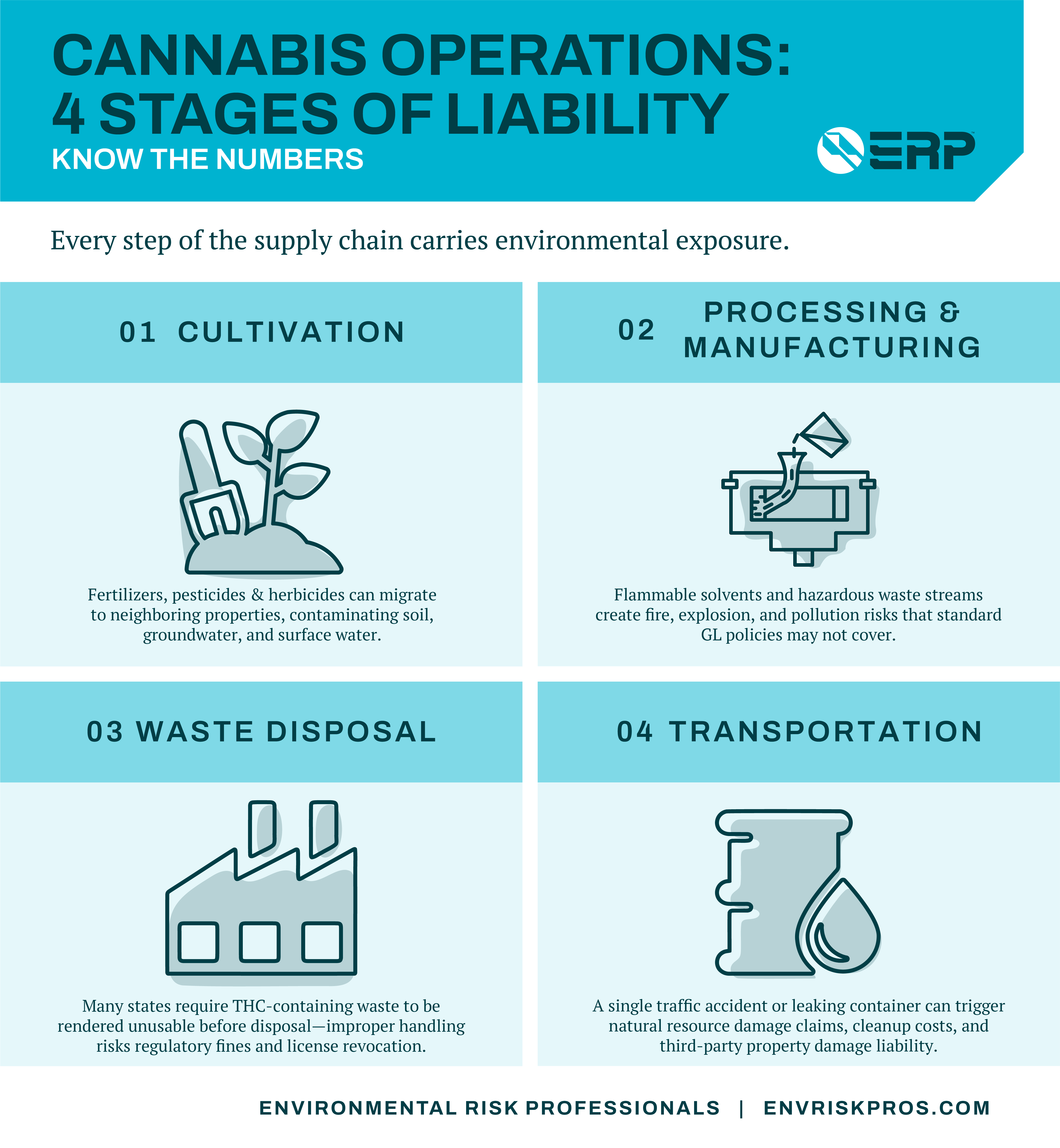
The environmental footprint begins at the cultivation stage, both indoor and outdoor, and extends to processing and manufacturing. Outdoor cultivation operations can cause soil erosion, leading to sediment run-off that degrades drinking water quality, contributes to flooding, and may carry excess nutrients that can cause toxic algae blooms. Indoor growing operations require heat and moisture, which not only consume large amounts of energy but also create a breeding ground for mold and Legionella. Legionella is the bacterium that causes Legionnaires' disease, a potentially fatal form of pneumonia. Both indoor and outdoor cultivators rely on fertilizers, pesticides, and herbicides. The misuse, overapplication, or improper disposal of these chemicals can result in environmental liability. If not properly contained, these contaminants can migrate to neighboring properties and contaminate soil, groundwater, and surface waters, resulting in extensive remediation costs and third-party bodily injury and property damage claims.
Cannabis processing and manufacturing operations face significant environmental exposures from the storage, handling, and use of hazardous materials. Depending on the method used for extracting cannabis oils, highly flammable solvents like butane, propane, and ethanol may be present at a facility. A fire or explosion involving these chemicals can release toxic fumes and contribute to ground-level ozone. Improper handling and storage of these substances can lead to releases that migrate into nearby soil, groundwater, and surface waters.
Cannabis manufacturing facilities also generate waste streams, including hazardous, universal, organic, or solid waste. The improper characterization, storage, or handling of these wastes can lead to environmental liability at the manufacturing facility, during transportation, or at the non-owned disposal facility.
While cannabis remains illegal on the federal level and is listed as a Schedule I controlled substance under the Controlled Substances Act (CSA) of 1970, state regulations vary. For example, many states, including California, Colorado, Washington, Michigan, and Florida, require wastes containing tetrahydrocannabinol (THC), the primary psychoactive compound found in the Cannabis sativa plant, to be rendered “unusable and unrecognizable” before disposal to prevent ingestion by wildlife or children. This can be done by grinding and mixing it with other solid waste so that the resulting mixture is at least 50% non-cannabis material. Improper identification and disposal of waste can result in regulatory penalties and possible license revocation.
Environmental exposures are not confined only to the facility. Transporters carrying raw materials, waste, or finished products may experience accidental releases during transportation, loading, and unloading. A traffic accident, leaking drums, or mechanical malfunction can discharge hazardous materials that can migrate into storm drains and local waterways, resulting in natural resource damage, cleanup costs, and third-party property damage claims. Relying on a general liability insurance policy is risky, as these policies include a pollution exclusion, either total or absolute, that leaves contractors and businesses unprotected against cleanup costs, emergency response expenses, and legal defense fees following a spill or release.
These are just some of the many environmental and human health exposures the cannabis industry faces. They illustrate the need for a proactive risk management approach. At Environmental Risk Professionals (ERP), we offer risk mitigation services through Pollution Prevention Practices (PPPs) and Best Management Practices (BMPs). Our PPPs provide information on environmental exposures and mitigation tools to prevent the release of toxic or hazardous pollutants. Our BMPs offer best practices to help identify and mitigate unsafe conditions to prevent accidents. ERP has various PPPs related to cannabis operations, including Wastewater Management, Erosion and Sediment Control, Chemical Overspray and Dust Control, Waste Characterization and Disposal, and Molds. In addition to safety-related issues for most businesses and contractors, we offer a BMP for securing the water supply at cannabis facilities.
ERP also offers Environmental Risk Overviews (EROs) for Cannabis Transporters, Cannabis Cultivation Operations, Cannabis Processing and Manufacturing Operations, and Cannabis Property Owners and Landlords. EROs discuss potential environmental risks contractors or businesses may face through their operations. EROs also include pollution liability insurance coverages that may be available to companies and businesses to protect them against claims arising from environmental incidents.
Throughout the cannabis industry, there are many opportunities to implement PPPs and BMPs to reduce potential environmental and health impacts. By embracing proactive environmental risk management, the industry can protect both itself and the environment, safeguard public health, and ensure that the “green” in cannabis represents far more than just profit.

Authors

Josie Mudd
Environmental Scientist
Environmental Risk Professionals
About Author

Josie joined Environmental Risk Professionals as an Environmental Scientist in 2024. She has a Bachelor of Science degree in Sustainability from the College of Global Futures at Arizona State University.
In her role she assists with identifying environmental risks associated with various industries and generating documents aimed at helping companies understand the environmental risks associated with their operations. She also provides support for our CERC certification program, development of Operations and Maintenance (O&M) plans, and other risk-based services, as needed.